
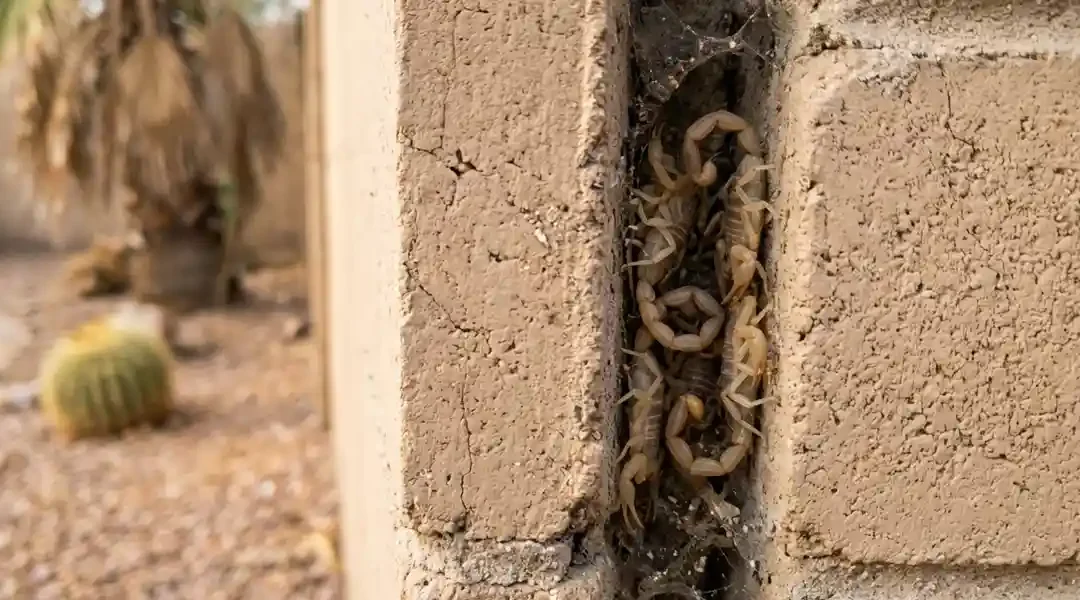
Do scorpions hibernate in Arizona? For most natives, this seems like an easy answer. For people who have just relocated to the Grand Canyon State, it’s intuitively a trick question. The majority of the former will probably think scorpions do hibernate, while the latter has at least a fifty-fifty chance of getting the right answer. Meanwhile, anyone residing in a different part of the country would enjoy the same stakes. So, it’s a good question and one that needs a good explanation to understand. Of course, this means there’s more nuance than just a “yes” or a “no,” which requires a bit of detail to make it understandable. Here’s what you need to know.
What Is and Isn’t Scorpion Hibernation
Scorpion hibernation is a lot like what many other “hibernators” experience. For instance, bears—contrary to conventional wisdom—don’t actually hibernate. These mammals instead enter into a state of torpor or what’s sometimes referred to as carnivoran lethargy. As for the desert stinging insect, scorpion “hibernation” is really a state of torpor, which is a state of physiological or mental dormancy, encompassing both general sluggishness and energy-saving metabolic suppression in animals.
So, no, scorpions don’t hibernate in the true sense, but they do go into an extended period of dormancy. This occurs when outside temperatures fall below 60°F to 65°F, which generally happens during the fall and winter months. However, it’s important to note this deep resting period isn’t a continuous sleep. Instead, it’s just light enough to allow them to wake up when they’re disturbed, or when there’s a change in the air temperature. For example, if it warms outside to 75°F or higher, scorpions are quick to wake up, especially if startled or threatened.
Where Arizona Bark Scorpions Go in a Phoenix Winter
Okay, now that we’ve explained how scorpions pass the cool and cold months, let’s take a few moments to lay out where they go and why. But first, you need to understand that there are big differences between most scorpion species and the Arizona Bark Scorpion. Unlike their cousin species, the Arizona Bark Scorpion is surprisingly social. In fact, these otherwise nasty insects are very social, especially during the cooler months when they take a long break. During the winter months in the Phoenix Valley, bark scorpions huddle together in clusters of 20 to more than 30 to stay warm and preserve moisture.
Outdoor Hiding Places
Most scorpions, particularly the Arizona Bark Scorpion, prefer tight, sheltered places, making cracks and crevices ideal, since these often offer protection from the frost and the extreme drop in temperature.
- Block wall crevices fit this description to a T, because these are great for squeezing between expansion joints or weep holes in cinderblock yard walls.
- Tree bark and palms are also terrific options, as tucking underneath loose palm fronds or tree bark supplies all the shelter they need, especially in citrus trees.
- Outdoor decor and rocks are also popular hiding spots because these are typically plentiful, being easily found in landscaping such as rock piles, woodpiles, tarps, and a whole lot more.
Indoor Hiding Places
Residential homes are the ultimate winter shelter because they offer climate control, allowing scorpions to skip torpor and stay relatively active. Inside a house, they’ll get everything they need, including a nice place to stay, food, and water. So, they’ll enter and camp in a few desirable locations.
- Wall voids and attics are ideal for clustering together in dark, undisturbed places, including wall cavities and roof lines.
- Garages and storage spaces likewise make good living quarters because scorpions can easily hide in cardboard boxes, behind stored holiday decorations, or right alongside warm concrete baseboards.
- Utility and water lines are also great places because they offer surprisingly good concealment, making water heaters, the underside of laundry sinks, and areas near plumbing penetrations ideal.
Key Takeaway for Phoenix Homeowners
Now, here’s the good news: one of the easiest times to deal with scorpions is during the fall and winter months because they’re far less active. This is because they’re a bit more sluggish and congregate in large groups, making targeted pest control a cinch. Unlike in the spring and summer, when scorpions tend to be a lot more active and out and about. So, if you suspect you have a scorpion problem, the fall and winter months are two of the best times of the year to find them and deal with them before they become an even bigger threat to you and your family.
Scorpion Hibernation FAQs
Can a scorpion sting you in the winter?
Yes, a scorpion can still sting you in the winter. Dormant bark scorpions wake quickly when disturbed, so reaching into a woodpile, moving stored boxes, or slipping on a shoe left in the garage can trigger a defensive sting. Wear gloves when handling outdoor items and shake out clothing and shoes before use.
Does a freeze kill scorpions in Phoenix?
No, an occasional Phoenix freeze rarely kills bark scorpions. They survive cold snaps by wedging into protected cracks, block walls, and wall voids where temperatures stay more stable. A cold night may keep them hidden longer, but the population typically returns in full once temperatures climb again in the spring.
What month do scorpions come out in Arizona?
Scorpions in Arizona typically become active again in March or April, as nighttime temperatures warm up. Activity builds through the spring and peaks during the hot summer and monsoon months, then tapers off in late fall. Warm winter days can bring a few out early, especially around homes with indoor heat.
Can you find scorpions with a black light in the winter?
Yes, scorpions still glow under ultraviolet light in winter, but you’ll see far fewer of them moving in the open. Instead of scanning walls at night, check likely hiding spots such as block wall joints, garage corners, and around water heaters. Always use gloves and long tongs if you plan to remove one.
How do I keep scorpions out of my house in the winter?
The best way to keep scorpions out in winter is to seal entry points before they settle in. Caulk gaps around pipes and windows, install weatherstripping and door sweeps, screen weep holes, and move woodpiles and rock piles away from the foundation. Reducing garage clutter also leaves fewer places for them to hide.
Do I need scorpion pest control year-round in Phoenix?
Year-round pest control is recommended for most Phoenix homes because bark scorpions never truly leave. Winter service targets clustered scorpions in their hiding spots and maintains a protective barrier, which helps prevent a surge of activity once spring arrives. Skipping treatment in cooler months often means starting over when scorpion season returns.