
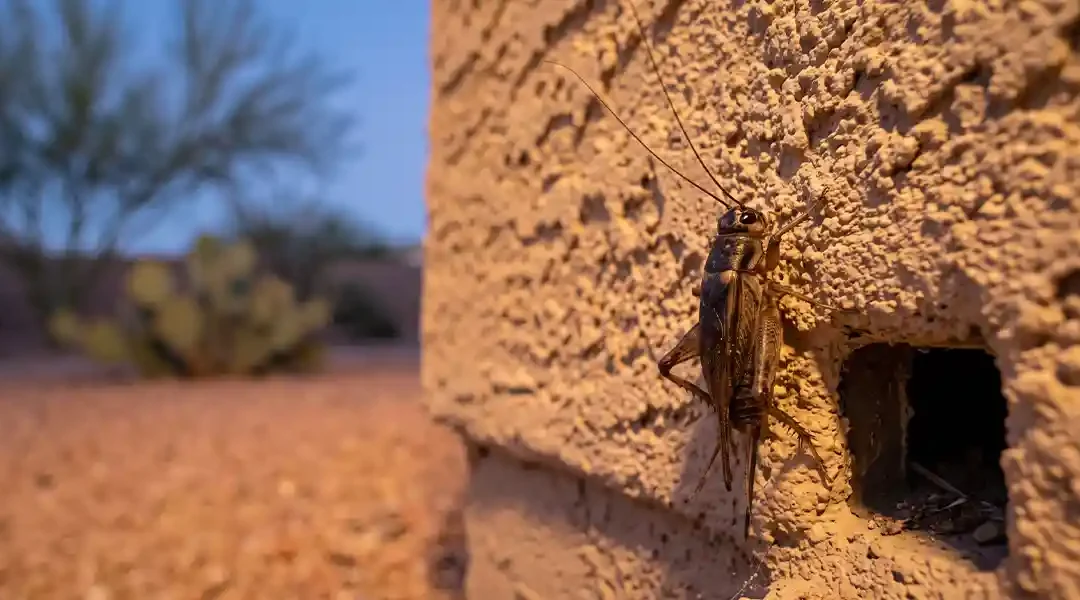
Phoenix is notorious for its fall cricket invasion, mainly because of statewide post-monsoon hatching, dropping desert temperatures, and common vulnerabilities like weep holes. This confluence of events means crickets can easily get into Phoenix homes and commercial properties, causing a number of problems. So, when you see one or more inside your place, you’ll probably trip over yourself to clumsily search “crickets in house Arizona.” So, you didn’t get the syntax right, but you are still horrified by what pops up on your screen.
You quickly learn that to prevent indoor invasions, property owners must put up physical and environmental barriers, which include, but aren’t limited to: capping weep holes, sealing all exterior gaps, and even upgrading outdoor lighting. Of course, this sounds like a lot of work, and it is, but being proactive will save you from feeling sorry in the future. Now, let’s get into why crickets get into Phoenix houses during the autumn and how to actually keep them out.
What Are Crickets and Are They Harmful?
Okay, we all know crickets are insects. But what most laypeople don’t know is that they are closely related to grasshoppers and katydids (which makes total sense). Generally, crickets aren’t harmful to either humans or pets because these particular insects aren’t venomous, they don’t have stingers, and very rarely bite. What’s more, crickets don’t actually pose a severe health or safety risk, but when they show up in large numbers, they become a big-time nuisance.
Although crickets don’t pose a distinct danger, that certainly doesn’t mean these invaders are completely harmless. In fact, these insects can be quite destructive. For instance, crickets will feast on textiles, including clothes, carpets, and upholstered furniture. However, it doesn’t stop there. Crickets should raise legitimate sanitation concerns because their bodies and waste can carry Salmonella or E. coli. (Additionally, their waste contaminates food.) Furthermore, crickets can disrupt sleep and cause deprivation because their chirping is so loud. This begs the question, “Why do crickets chirp?” The answer is simple. Crickets, but only male crickets, chirp in order to attract mates and defend their territory. Meanwhile, getting back to damage, crickets are well-known for their lawn destruction and because they’re food for disgusting predators, such as spiders, centipedes, and rodents.
Why Crickets Creep into Phoenix Residences
Just like people and pets, crickets need three basic things to survive: water, food, and shelter. (This is true of all pests, regardless of whether they’re insects or rodents, by the way.) So, your home is the perfect place, particularly during the fall as temperatures drop. And better yet, your house has various sources of water, all kinds of food to nibble on, and a little area to keep warm. Fall is a big motivation because temperatures drop, and since crickets are warm-blooded critters, they need a way to regulate their body temperature. Hence, your home is the perfect environment. Speaking of the perfect place, crickets thrive in high-humidity spaces, explaining why they often crowd into crawlspaces, bathrooms, and laundry rooms. Kitchens are also a favorite because they usually have plenty of food debris, crumbs, pet food, and more. Plus, crickets love to chew on cardboard, paper products, and organic material.
What Will Keep Crickets Out of Your Desert Den
Because crickets exploit tiny openings and need food, water, and shelter, those are the very things you need to take care of. It’s important to seal all entry points that allow crickets and other creepy crawlies to get inside your house. Also, eliminate moisture wherever it exists, including repairing leaks and using dehumidifiers. While these preventative measures will help, it’s also equally important to either move or remove woodpiles and mulch, keep your lawn maintained, clean out your gutters, and trim outdoor plants.
Another proactive step is to use light to your advantage. Replace white light bulbs with yellow ones because this color is far less attractive. Put your outdoor lights on motion sensors so they don’t shine all night long and only come on when necessary. Also, keep your blinds or curtains closed at night to prevent light from shining outside, since this light can attract crickets and other pests.
Myths that Don’t Prevent Crickets from Getting Inside
Okay, these preventative measures work pretty well. But there are several old wives’ tales circulating that guarantee to get rid of crickets. One such myth is ultrasonic pest repellents. While a high-tech gadget like an electric ultrasonic device may seem like it will work, it won’t. Essential oils are another “fix” that’s just a fallacy and not much else because they evaporate very quickly, making even their meager “effectiveness” negligible, if not none.
Yet another is diatomaceous earth, but it only works if crickets crawl through it. If those insects go around it, then it’s a waste of time. Also, household pets, particularly cats, won’t naturally seek out and hunt crickets. Although cats and dogs may leap into action if they see something creep across the floor, your pets probably won’t be tracking them down. Meanwhile, household cures like molasses and syrup can be used for traps, but the problem with these sweet temptations is that they attract crickets. So, you’ll probably end up with more in your house than keeping them out.
Crickets in Phoenix Homes FAQs
Do crickets attract scorpions in Arizona?
Yes, crickets are one of the main food sources for Arizona bark scorpions. When crickets gather around your foundation, walls, and garage, scorpions follow the easy meal. That’s why a fall cricket problem can quickly turn into a scorpion problem, and why controlling crickets is an important part of keeping scorpions out of Phoenix homes.
Can crickets lay eggs inside your house?
Yes, but it depends on the species. House crickets can breed indoors in warm, damp spots like basements, crawlspaces, and behind appliances. Field crickets, the kind most common in Phoenix yards, usually lay eggs in moist soil outdoors and rarely reproduce inside. Either way, a steady stream of crickets indoors means they’re finding easy entry points.
How long do crickets live inside a house?
Most crickets that wander indoors live only a few weeks. Adult crickets typically live two to three months in total, and the dry air inside an air-conditioned Phoenix home shortens that further. Crickets that find a damp hiding spot with food, such as a laundry room or garage, can survive longer and keep chirping for weeks.
How do you find a chirping cricket in your house?
Follow the sound slowly and quietly, because crickets stop chirping when they sense movement or vibration. Check along baseboards, behind appliances, under furniture, and in laundry rooms, garages, and closets. Searching at night with a flashlight works best, since crickets are most active after dark and tend to hide near warm, humid spots.
Do crickets come back every year in Phoenix?
Yes, Phoenix sees a cricket surge almost every year from late summer through fall. Monsoon moisture triggers hatching, and populations peak as nights cool. Heavier monsoon seasons usually mean bigger invasions. Because the cycle repeats, sealing entry points and keeping a perimeter treatment in place before late summer is the most reliable way to stay ahead of them.
Does professional pest control get rid of crickets?
Yes, professional pest control is one of the most effective ways to reduce crickets around your home. Technicians treat the foundation, entry points, and landscape where crickets hide, and spot gaps you might miss. Recurring service keeps that barrier in place through the fall surge and helps cut down on the scorpions and spiders that feed on crickets.