
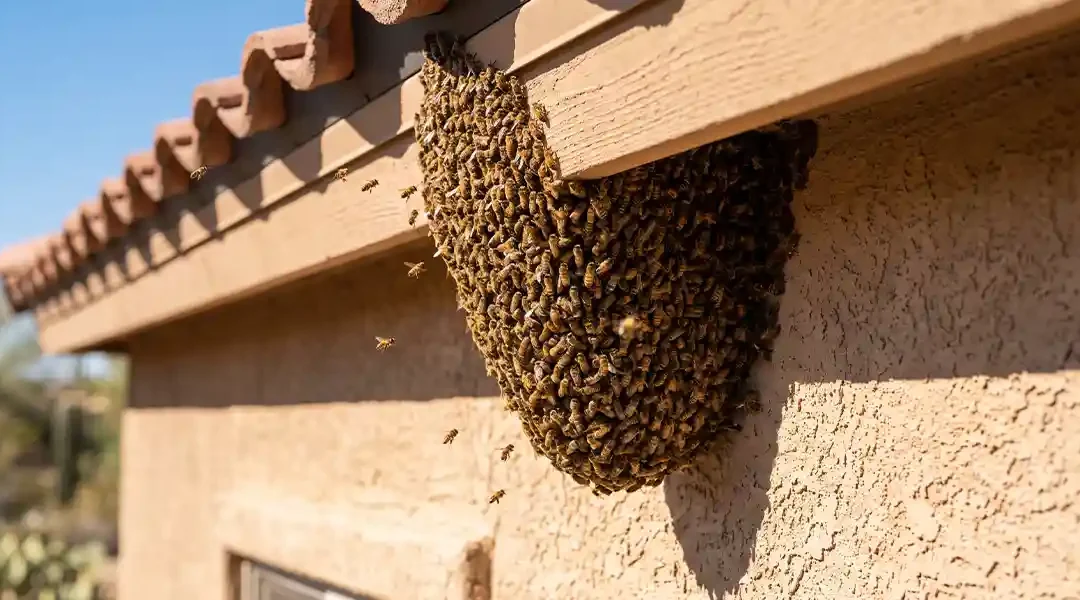
Bees are vital to the ecosystem here in Phoenix. Bees not only help sustain the Sonoran Desert’s delicate ecosystem, but they also help local agriculture thrive by doing what they do best. And that job is pollinating native plants, such as cacti, crops, citrus, and melons. In fact, bees pollinate more than 4,000 plant species, and likewise assist in these processes. These pollinators are essential for maintaining the balance between urban development and the surrounding natural desert environment. What’s more, Arizona holds the second-most diverse bee population in the U.S., with over 1,300 native bee species that are specifically adapted to pollinate desert flora.
So, as you can see, bees are a vital part of the Phoenix area and throughout the state of Arizona. However, this doesn’t mean that bees are never problematic to people or property. Unfortunately, bees can not only become a nuisance but also pose a danger to people, pets, and more. All of this is to say that while bees are important, they do have their place, and it shouldn’t be a threat to families or their household pets. Which means people can sometimes be tricked when they seek help with bee removal.
Beware Bee Scams
Did you know that Pollinator Week is coming up? Here’s a fun (but scary) fact. Inside metro Phoenix, Africanized bees now make up 99% of urban bees. Yep, that’s right, nearly all the bees in this area are Africanized. Now, while they are important pollinators, these aggressive “killer bees” pose a serious safety risk around homes and yards.
Okay, so many companies promote bee removal or “live relocation,” but in reality, it’s not that simple. There are a few beekeepers in the area, and even fewer want aggressive Africanized hives. Relocation is difficult, often fails, and cannot be guaranteed—even if you pay extra for it.
Because Africanized bees repopulate up to 33 times faster than European bees, paying for “humane” relocation rarely saves them and can create a false sense of doing good. Focus on safe, effective removal by a reputable company instead. Always ask what actually happens to the bees, because some so-called bee removal services tell homeowners or business owners they’ll relocate and rehome bees. Still, in reality, they merely exterminate them and claim they’re saving the bees.
Ways Phoenix Homeowners Can Humanely Deal with Bees
Dealing with bees in Phoenix, Arizona, requires caution due to the high prevalence of Africanized “killer” bees, which are highly defensive and can pose a real danger to humans. When there’s a small problem, don’t create a large problem by trying to do-it-yourself.
Property owners should not resort to spraying bees with a garden hose either. Although damp or wet bees will typically be unable to fly, you’ll probably not soak all of them, and the ones who escape the spray will likely become defensive, increasing the risk of being stung multiple times.
Safe Bee Removal By the Professionals at Invader Pest Management
When bees arrive and take up residence on a property in Phoenix, chances are excellent that these won’t be helpful honeybees that are a vital part of the local ecosystem. Instead, the bees that swarm in will usually be Africanized, which are much more aggressive and an invasive species that displaces their European cousins. This means you’ll need experienced, trained professionals for bee removal situations. Invader Pest Management has the technicians and the tools to safely remove bees before they become a threat to you and your family. We’ve helped countless families keep their kids and pets safe and can do the same for you, too.
We’ll carefully assess the situation, consider all relevant factors, and formulate a workable plan to remove those bees from your property, whether it’s a residential or commercial space, regardless of the size or the location.
Don’t try the do-it-yourself route; it’s too much of a risk. Bees present a big danger, especially for allergic individuals and for vulnerable individuals, such as small children and older people. (Not to mention pets, which can put themselves in harm’s way when trying to protect their territory and their human families alike.)