
With 2026 in full swing, many home and business owners want to make it a great year. And while there are certainly aspirations and goals, it’s tough to achieve success when built on a shaky foundation. What’s particularly peculiar is that most people don’t think about simple things, such as pests. Pests? That’s right, pests. After all, if your home or business is under assault by insects and/or rodents, you’ll be preoccupied with worry rather than focusing on the next milestone. So, let’s take a look at the most troublesome pests and what you can do to protect your property.
A Persistent Challenge in the Desert
Imagine returning home after a sweltering day in Phoenix, only to discover an uninvited guest scuttling across your kitchen floor—a bark scorpion, its tail arched in silent threat. Such encounters grow more frequent as Arizona’s arid landscape evolves under mounting pressures. Homeowners in this vibrant metropolis face an escalating array of pests, driven by subtle yet profound environmental shifts.
These invaders do not merely annoy; they imperil health, compromise structures, and erode peace of mind. As we navigate 2026, understanding these threats becomes imperative for safeguarding one’s domicile.
The Influence of Climate and Urban Expansion
Changes in climate profoundly influence pest dynamics in the Southwest. Warmer winters and extended breeding seasons allow populations to proliferate unchecked. For instance, prolonged heat waves—now a hallmark of Phoenix summers—foster conditions where insects and arachnids thrive. Urban sprawl compounds this issue; new developments encroach on natural habitats, displacing creatures into residential areas.
Moreover, irregular monsoons introduce sporadic moisture, ideal for breeding grounds. Therefore, pests that once remained peripheral now infiltrate homes with alarming regularity. Making matters worse, global trends indicate rising infestations of disease vectors, amplifying risks for families. However, proactive awareness equips homeowners to effectively mitigate these encroachments.
The Formidable Five
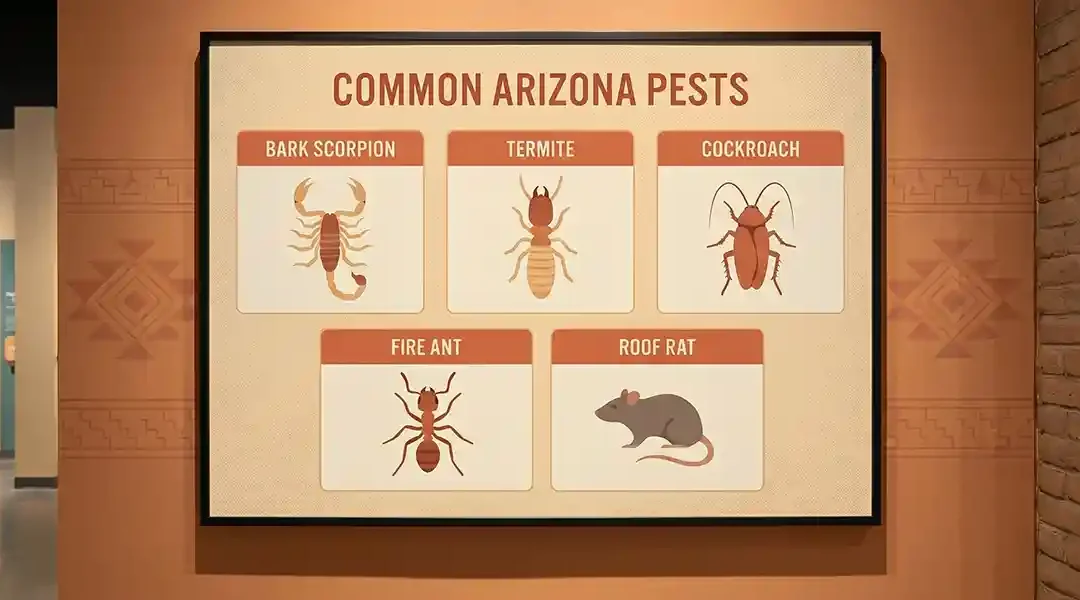
Among the myriad nuisances in Phoenix, five pests demand particular vigilance in 2026. Selected based on prevalence, destructive potential, and adaptability to local conditions, they include scorpions, termites, cockroaches, ants, and rodents. Each poses unique hazards, from venomous stings to structural sabotage. Consider their impacts systematically.
1) Scorpion Intrusions
Scorpions, particularly the Arizona bark scorpion, rank among the foremost concerns. These arachnids flourish in the desert’s crevices, emerging nocturnal hunters under black lights that reveal their eerie glow. Their venom induces severe pain, numbness, and, in vulnerable individuals—such as children or the elderly—respiratory distress. In 2026, warmer temperatures extend their active periods, increasing encounters in yards and interiors.
Meanwhile, homes near undeveloped land prove especially susceptible; scorpions slip through cracks as small as one-sixteenth of an inch. Vigilance involves sealing entry points and reducing clutter, yet their persistence underscores the need for ongoing monitoring.
2) Termite Devastation
Termites embody silent destruction, gnawing through wood undetected until damage manifests. Subterranean and drywood varieties dominate Phoenix, where dry climates paradoxically aid their survival. Colonies can encompass millions, with queens producing thousands of eggs daily. Structural integrity suffers immensely—foundations weaken, beams collapse, and repair costs soar into the tens of thousands.
Climate shifts exacerbate this; milder winters permit year-round activity, while urban irrigation provides the requisite moisture. Homeowners often discover infestations too late, through mud tubes or hollowed frames. Prevention hinges on soil treatments and bait systems, but early detection remains paramount to avert catastrophe.
3) Cockroach Resilience
Cockroaches demonstrate remarkable tenacity, surviving extremes that would fell lesser organisms. German and American species prevail here, thriving in warm, humid niches like kitchens and bathrooms. They disseminate allergens, triggering asthma exacerbations, and vector pathogens such as Salmonella. A single female can produce hundreds of offspring, leading to rapid population surges.
In 2026, escalating urban density facilitates their spread via shared utilities and waste. These pests can survive without food for months, making eradication challenging. Sanitation proves essential—eliminate water sources and store food securely—yet their adaptability demands comprehensive strategies to curb proliferation.
4) Ant Invasions
Ants orchestrate coordinated assaults, their colonies functioning as superorganisms. Fire ants and carpenter ants pose dual threats: painful stings from the former, wood-boring habits from the latter. Pheromone trails guide foragers to sustenance, leading to swift kitchen takeovers. Health risks include allergic reactions, while property damage accrues from nesting in walls or foundations.
Phoenix’s variable weather in 2026—drier spells punctuated by rains—bolsters their resilience, as ants cultivate fungi and share resources efficiently. Barrier treatments and bait stations offer defense, but overlooking a trail invites recurrence. Remember, these insects predate dinosaurs; their evolutionary prowess commands respect.
5) Rodent Menace
Rodents, exemplified by roof rats, infiltrate attics and crawl spaces with ease. These agile climbers chew wiring, risking fires, and contaminate surfaces with droppings laden with hantavirus or leptospirosis. Litters of up to a dozen pups ensure exponential growth; a pair can yield hundreds in a year. Urban expansion displaces them into suburbs, where fruit trees and pet food lure them closer. Warmer climates in 2026 prolong breeding cycles, heightening infestation rates. Trapping and exclusion seal vulnerabilities, yet gnawed entry points demand swift repair. Their nocturnal rustlings disrupt sleep, compounding psychological strain.
Proactive Measures for Protection
Confronting these pests requires a multifaceted approach. Begin with habitat modification: clear debris, trim vegetation, and maintain dry perimeters to deter entry. Integrated pest management—combining cultural, mechanical, and chemical tactics—yields sustainable results. For example, deploy sticky traps for monitoring, apply granular baits judiciously, and inspect annually for signs of activity. Education empowers; familiarize yourself with identification cues, such as scorpion fluorescence or termite frass. However, self-reliance has limits; complex infestations necessitate expertise.
Seeking Expert Assistance
In this arena, professional intervention proves invaluable. Invader Pest Management, a stalwart in Phoenix, offers tailored solutions grounded in local knowledge. Their technicians employ advanced techniques—such as thermal imaging for termites and eco-friendly ant repellents—to address root causes. Regular service plans prevent escalations, ensuring tranquility amid the desert’s challenges. Engaging such specialists not only resolves immediate threats but fortifies long-term resilience.
Enduring Vigilance and Its Rewards
As 2026 unfolds, Phoenix homeowners must embrace vigilance against these insidious invaders. The stakes—health, property, and serenity—demand no less. By understanding their behaviors and implementing defenses, one transforms vulnerability into strength. Ultimately, a pest-free home fosters well-being; act decisively to preserve it.