
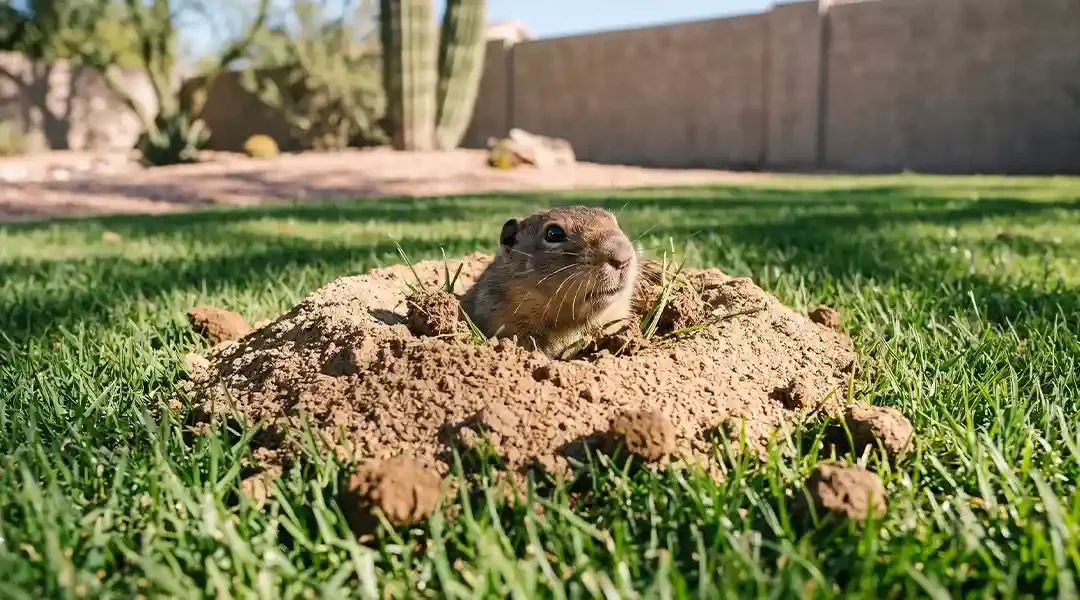
Is your Phoenix lawn under active attack? Those mysterious, ugly mounds of soil are more than just an eyesore—they’re the calling card of a pocket gopher invasion. That’s right. These burrowing rodents turn pristine yards into pockmarked wastelands, and the time to act is now!
But all is not lost. Read on for your essential guide to year-round gopher control. Below, we’ll focus on the critical winter and spring interventions that prevent the coming surge from decimating your landscape.
Effective Gopher Control in Phoenix Yards
Picture this—a pristine Phoenix lawn, meticulously maintained under the relentless Arizona sun, suddenly marred by unsightly mounds of excavated soil. These are not mere imperfections; they signal an underground invasion by pocket gophers, those elusive rodents that can transform verdant spaces into pockmarked wastelands.
For homeowners in the Valley of the Sun, such disturbances demand immediate attention. Invader Pest Management, a stalwart in Phoenix pest control since 1994, understands the urgency. So, let’s go ahead and delineate the essentials of gopher control and emphasize the pivotal role of winter and spring interventions to curtail populations before they proliferate.
Understanding Gopher Behavior
Pocket gophers, scientifically termed Thomomys bottae, are fossorial creatures—meaning they dwell primarily underground, burrowing extensively to forage and nest. In the arid expanses of Phoenix, these animals thrive due to the region’s sandy soils and sparse vegetation, which facilitate their tunneling.
In fact, each individual gopher can excavate tunnels spanning hundreds of feet, disrupting root systems and compromising landscape integrity. Not only that, but they also feed on plant roots, bulbs, and tubers, often decimating gardens and lawns without ever surfacing fully. Making matters worse, a single gopher can produce multiple litters each year, and populations can surge in favorable conditions.
The good news is that their activity patterns offer windows for effective management. Meaning, they remain active year-round in milder climates like Phoenix, but exhibit heightened vulnerability during specific seasons.
The Critical Seasons for Intervention
Winter and spring are the most critical periods for reducing gopher populations in Phoenix yards. During the cooler winter months—typically from December through February—the soil softens from occasional rains, prompting gophers to intensify burrowing near the surface. This uptick in activity makes them more accessible to control measures.
Come spring, as temperatures rise and vegetation flourishes, breeding accelerates; litters born in late winter mature rapidly, expanding colonies exponentially. Research from agricultural extension services, such as those affiliated with the University of Arizona, shows that interventions during these seasons yield better results than summer efforts, when drier, compacted soils drive gophers deeper underground.
Therefore, proactive measures now, in the heart of winter 2026, can preempt the spring surge. Delay invites escalation; a modest infestation today burgeons into widespread damage by summer.
Identifying Infestation Signs
Recognition forms the bedrock of any control strategy. For example, new, fresh mounds—crescent-shaped piles of fine soil, often plugged at the center—constitute the most evident indicator. These differ from mole hills, which lack plugs and appear more volcano-like. Additional clues include wilting plants, whose roots have been severed; uneven turf from collapsed tunnels; and occasional sightings of the gophers themselves—stocky, brown-furred mammals with prominent incisors and small eyes.
In Phoenix, where irrigation sustains lawns year-round, such signs may persist even in drier periods. For instance, a homeowner might notice a cluster of mounds near a drip line, where moist soil attracts foraging. Vigilance is key; regular inspections, particularly after rainfall, reveal emerging threats. Remember, isolated mounds suggest the beginning of a trouble spot, whereas interconnected patterns denote established networks demanding swift action.
Strategies for Population Reduction
To effectively reduce gopher numbers, employ a multifaceted approach that blends mechanical, chemical, and preventive tactics. Begin with trapping, a humane and targeted method endorsed by pest management experts. Use cinch or box traps placed in active tunnels—probe the mound with a rod to locate the main burrow, insert the trap, and cover it to block light.
Check traps daily; success rates peak in winter and spring when gophers frequent shallower depths. Alternatively, rodenticides such as strychnine baits, applied via burrow probes, offer potent control, though they require careful handling to avoid non-target species. Fumigation, involving gas cartridges ignited in sealed tunnels, proves efficacious in moist soils prevalent during these seasons.
Preventive measures bolster these efforts. Install underground barriers—wire mesh or hardware cloth — buried at least 2 feet deep around gardens to impede burrowing. Also, cultivate gopher-resistant plants, such as salvia or lavender, which deter through unpalatable roots. Moreover, reduce attractants; overwatering fosters lush roots, inviting infestation, so optimize irrigation. For example, a Phoenix resident facing mound proliferation might combine trapping with barriers, achieving population stasis within weeks. Integrated pest management, as practiced by professionals, combines these techniques to achieve sustainable outcomes.
Engaging Professional Expertise
While do-it-yourself methods suffice for minor issues, entrenched infestations demand expert intervention. Invader Pest Management excels in this domain, deploying seasoned technicians equipped with advanced tools for precise gopher eradication. This approach—rooted in over three decades of Phoenix service—integrates eco-friendly options alongside proven rodenticides and traps. Consider a golf course adjacency where gophers exploit expansive turf. Invader’s on-site assessments ensure tailored solutions that minimize disruption.
Safeguarding Your Property Long-Term
As you can see, gopher control in Phoenix demands timeliness, particularly in winter and spring, to avert population growth and prevent damage. By understanding behaviors, spotting signs early, and implementing robust strategies, homeowners can reclaim their yards.