
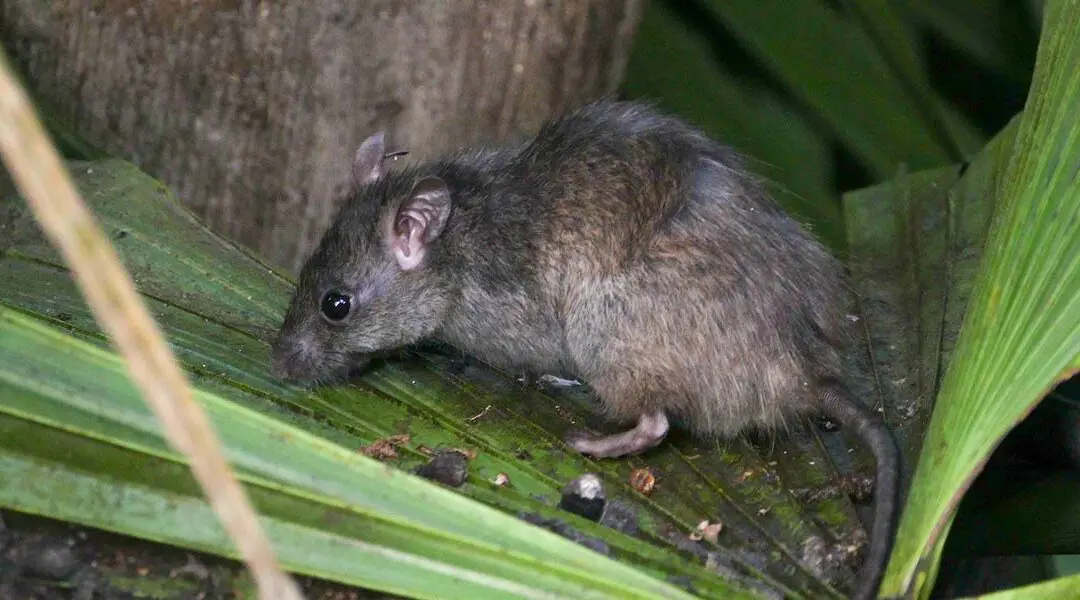
How Roof Rats Are Expanding Across the Phoenix Valley
Roof rats. Ugh. Is there anything more disgusting? More filthy? More frightening? Perhaps the dreaded bark scorpion. But when it comes to pests, few things outside roaches evoke such strong recoil and vile. These dirty creatures aren’t just unclean. They are an absolute menace—one that does far more than take over a space—they can and do cause substantial destruction. Even worse, they spread disease and multiply rapidly, exacerbating the problem.
Also known as ship rats and black rats, roof rats got their name due to their unique behavior. Unlike their ground-dwelling cousins, roof rats are “arboreal,” which means they live in trees or elevated areas. What’s most disturbing about this preference is how they get up there in the first place. Excellent climbers, roof rats are extraordinarily agile, enabling them to occupy areas such as attics and other elevated spaces.
Making it all the more revolting is the fact that these critters reproduce at a rapid rate. So, the longer they go undetected, the more of them you’re dealing with. It’s also why so many Phoenix home and business owners turn to Invader Pest Management. Now, take a few minutes to read on to learn why roof rats are such a threat in this area.
Growing Problem in the Desert
It’s certainly no secret to local residents that Phoenix has experienced exponential growth. Just twenty-five years ago, in 2000, the population was 1,321,045, residing in 465,834 households within the city. In 2024, the numbers grew to 1,673,164 people living in approximately 631,270 households. If you’re keeping track, that’s a 26.65% increase among residents, with a 35.51% increase in homes. And it continues to grow today.
Unfortunately, as the local population grows in Phoenix and the area expands, so do pests. It’s a simple equation. With more people, households, and businesses, there are more places to find the bare necessities: food, water, and shelter. Those three things are all that are needed to cause pests to multiply and spread out. In other words, where people go, rodents will follow.
Why Roof Rats Are Expanding Their Territory
Simply summed up: urban sprawl creates new nesting opportunities. Think about it this way: with new landscaping, fruit trees, and irrigation, there are more attractive opportunities. Additionally, our warm winters help keep roof rats active for most of the year. This means there is no true “off-season” for roof rats, which prefer to take up residence in areas such as rooftops, attics, trees, and other elevated spaces.
What makes matters worse is the fact that too many homeowners do little to nothing to deter these rodents. Even when homeowners do take action to get rid of them, enough rats escape to nearby properties and set up shop all over again. So it becomes a game of whack-a-mole as one home or business gets them evicted, another is subsequently invaded. Fortunately, your home or business doesn’t have to be an attractive haven.
Signs of Infestation in Homes and Businesses
All right, now that we’ve established the fact that roof rats are agile, excellent climbers, and can relocate quickly, how do you know they’re not hiding out in your house or business?
Well, there are several telltale signs.
The most obvious are things such as droppings in attics, garages, or storage areas. Or, chewed wires, insulation, or packaging. Then, there are less obvious give-aways, such as grease marks along walls and beams. Of course, you may also hear scratching sounds in ceilings or walls, particularly during the evening hours.
The Damage They Cause
Unfortunately, too many people think that although rats are disgusting, they’re more or less harmless. But this simply isn’t true. Rats, like termites, can cause significant damage, and it isn’t limited to scratch marks. Rodents can inflict a lot of harm on a home or business, including, but not limited to, structural damage from gnawing and nesting, and fire hazards from chewed electrical wires. Sadly, there is more. Rats can also contaminate food and surfaces, as well as spread diseases through their droppings and urine.
Suburban Vulnerability: Why Newer Areas Are at Risk
First and foremost, new developments often lack a mature pest control infrastructure, which roof rats exploit through gaps in construction and landscaping. Then there are new commercial areas. Businesses with outdoor trash, storage, or food service are also prime targets.
How Invader Pest Management Can Help
The good news is, Invader Pest Management is here to lend a helping hand. We have local experts in roof rat behavior and control, and utilize safe and effective rodent exclusion and treatment plans. Plus, we offer ongoing monitoring to prevent reinfestation for both residential and commercial properties.
Regardless of the type, size, or location of the property, we can take care of it. Whether it’s new construction, an established older neighborhood, or a brand-new commercial setting, Invader Pest Management has the experience and equipment to handle virtually any pest problem.
Don’t Let Roof Rats Take Over Your Territory
A new home feels welcoming and comforting. But what’s true for people is also true for pests—especially rodents. Since new properties often lack pest control measures, roof rats can move in and expand their families fast. All they need is a little time to take up residence, and in short order, they begin inflicting all kinds of damage.
The answer is to be proactive. Act before rats sneak into your home or business. Contact Invader Pest Management for a customized rodent control plan. The longer you put it off, the more opportunities rodents have to wreak havoc.